ASIC is Australia's main regulator for financial services and markets. It administers Australian financial-services licensing and can supervise and act under the laws within its remit. For a trader, the practical question is not simply whether a broker calls itself "ASIC regulated". It is which legal entity will provide the service, what that entity is authorised to do, and whether those permissions match the product in your account.
A broker may hold an Australian Financial Services Licence (AFSL), or operate as an authorised representative of an AFSL holder. A licence is a meaningful regulatory requirement, not a safety rating or a promise that an investment will make money. This guide sits under the Australia regulation hub and explains how to read the register and where the limits are.
What is ASIC?
The Australian Securities and Investments Commission (ASIC) is an independent Commonwealth regulator responsible for Australian companies, financial services and markets, and consumer credit. Its functions are set out in the Australian Securities and Investments Commission Act 2001, and it also administers laws including the Corporations Act 2001. See ASIC's overview of its role for its remit.
For financial services, ASIC's role includes licensing eligible firms, setting and enforcing conduct requirements, monitoring markets and investigating suspected misconduct. It also publishes registers, warnings and consumer information. The remit is broad, but ASIC does not guarantee the performance or solvency of a licensed business, recommend brokers, or reimburse ordinary market losses.
ASIC and the other Australian regulators
More than one public body may be relevant to a product or provider. Their roles differ, and one registration does not substitute for another.
The right authority depends on the activity and the legal entity. For crypto, for example, AML/CTF registration and the regulation of a financial product are different questions.
| Body | Main role | What a trader should not infer |
|---|---|---|
| ASIC | Regulates financial services and markets and administers AFSL licensing. | A licence is not an endorsement of a broker, product or strategy. Check the precise entity and permissions. |
| AUSTRAC | Financial intelligence and AML/CTF oversight; requirements can apply to digital-currency exchanges. | AUSTRAC registration is not an AFSL and does not establish that a crypto asset or exchange is safe. |
| APRA | Prudentially supervises specified institutions, including banks, insurers and super funds. | A broker's bank being APRA-regulated does not make the broker an APRA-regulated investment provider. |
| RBA | Australia's central bank, including monetary policy and parts of the payments system. | "RBA regulated" is not evidence a broker has ASIC permission to provide financial services. |
| AFCA | External dispute resolution for eligible complaints involving member firms. | AFCA is not the licensing regulator and does not automatically compensate everyone who loses money. |
What does an AFSL authorise?
An AFSL is issued by ASIC to a legal entity that is authorised to provide specified financial services, subject to the licence's conditions and the law. A firm may instead provide services as an authorised representative under another entity's licence. The brand name shown in an advert may be neither entity.
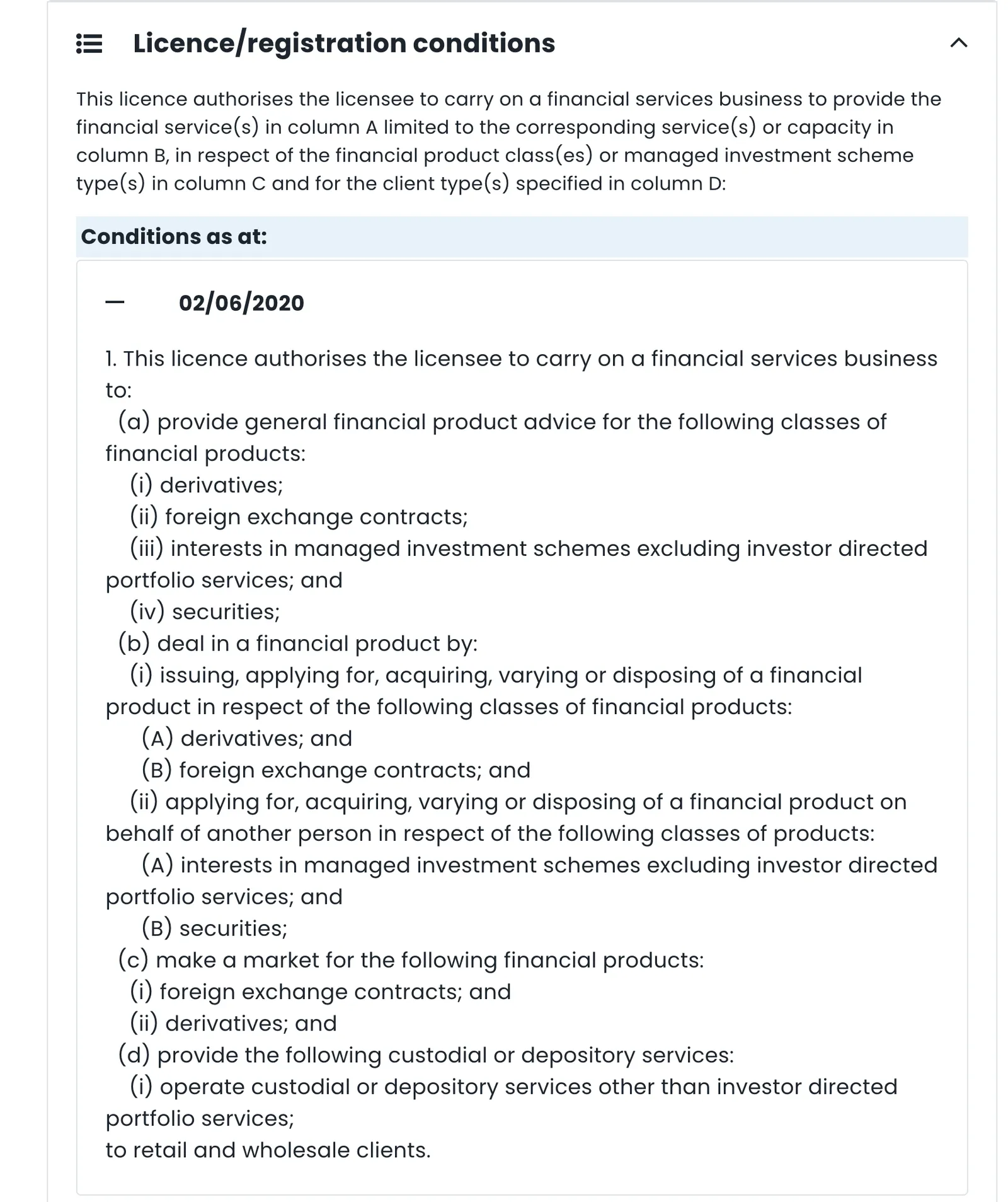
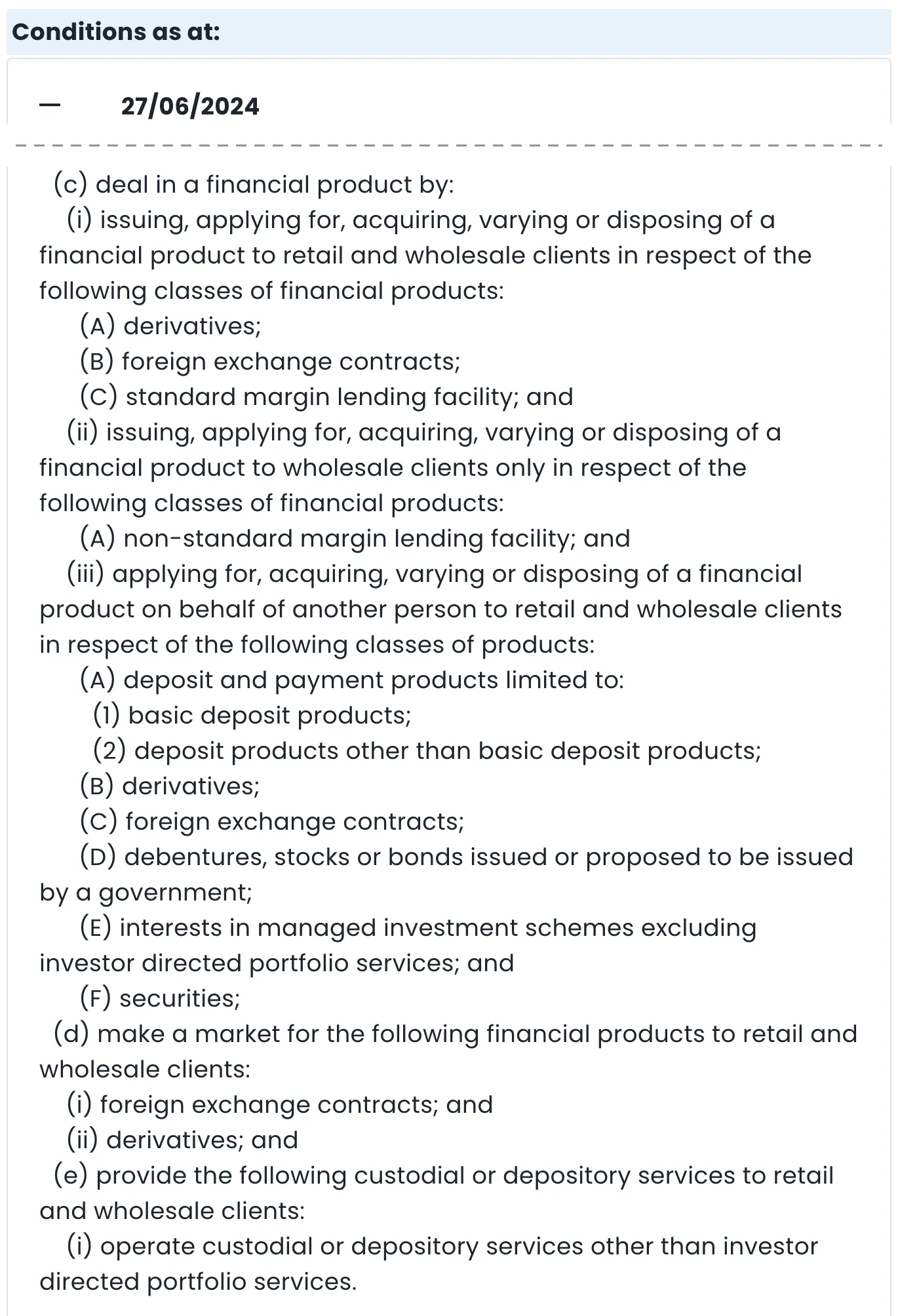
A licence is not a blank cheque. The authorisations and conditions matter. Depending on the firm and service, permissions may relate to activities such as dealing in or arranging financial products, giving financial product advice, making a market, or providing custodial or depository services. Do not assume a firm authorised for one activity may perform every other activity or hold every type of client asset.
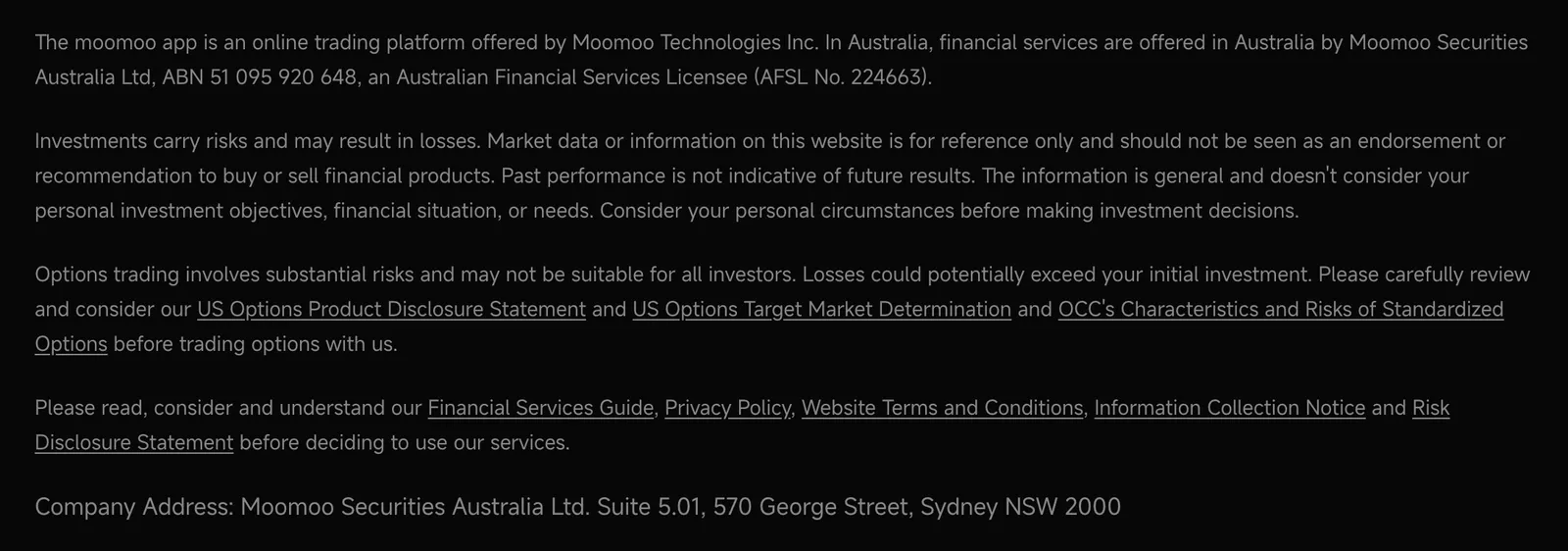
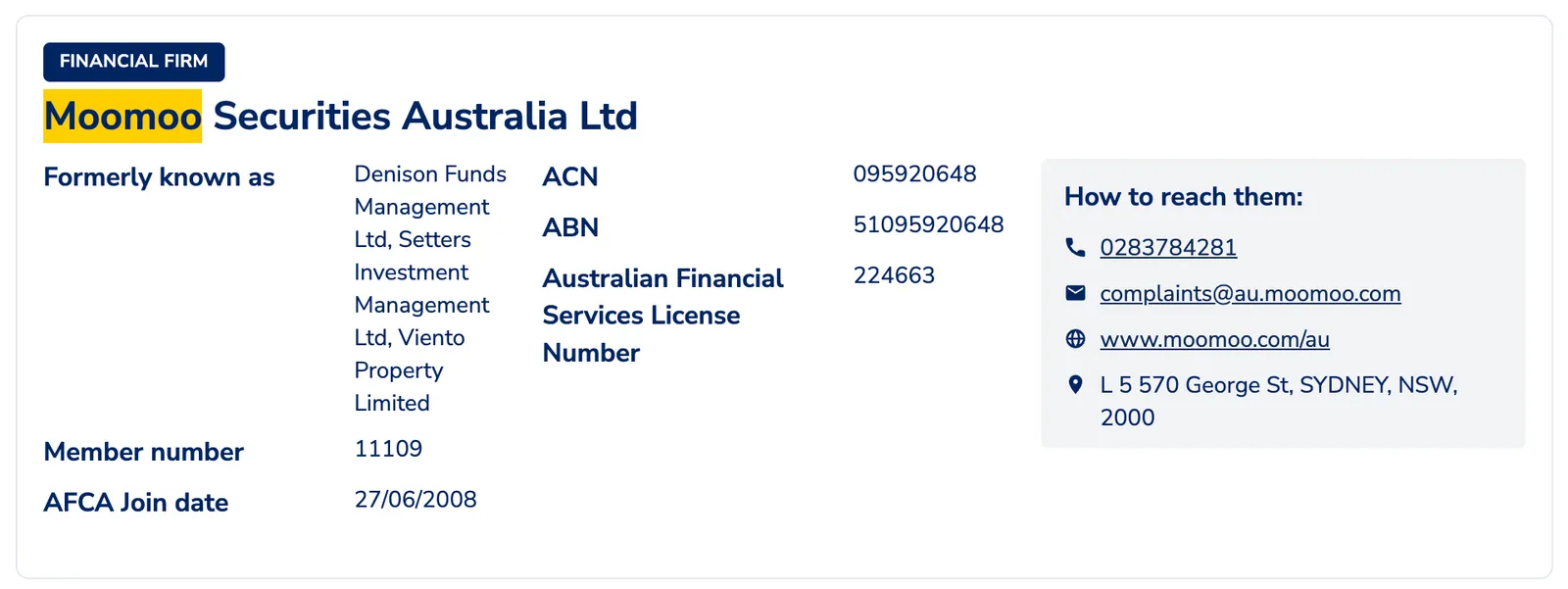
The same brand may use different group companies for Australian and overseas customers, or for different products. The entity in your account agreement and product disclosure documents is the starting point for understanding which regulator and terms apply to your account.
What ASIC regulation means for you, and what it does not
ASIC licensing places legal obligations on a firm. Depending on its business and authorisations, these can include conduct, disclosure, conflicts, compliance, financial-resource and client-money requirements. The details are not identical for every licensee or product. Check the actual licence entry and disclosure documents rather than relying on a generic claim like "fully regulated".

ASIC can investigate suspected breaches and take regulatory action, and it publishes consumer alerts and enforcement information. A warning list is useful but not exhaustive: not appearing on a warning list is not proof that a firm is licensed or safe.
ASIC regulation does not mean:
- the government guarantees a return or will reimburse ordinary trading losses;
- every client asset will be immediately recoverable if a firm fails;
- the regulator has tested or recommended the broker's platform;
- an ASIC licence covers every product, service, website or overseas group company using the same brand; or
- you can skip checking the contracting entity and licence permissions.
Client money and compensation are separate questions
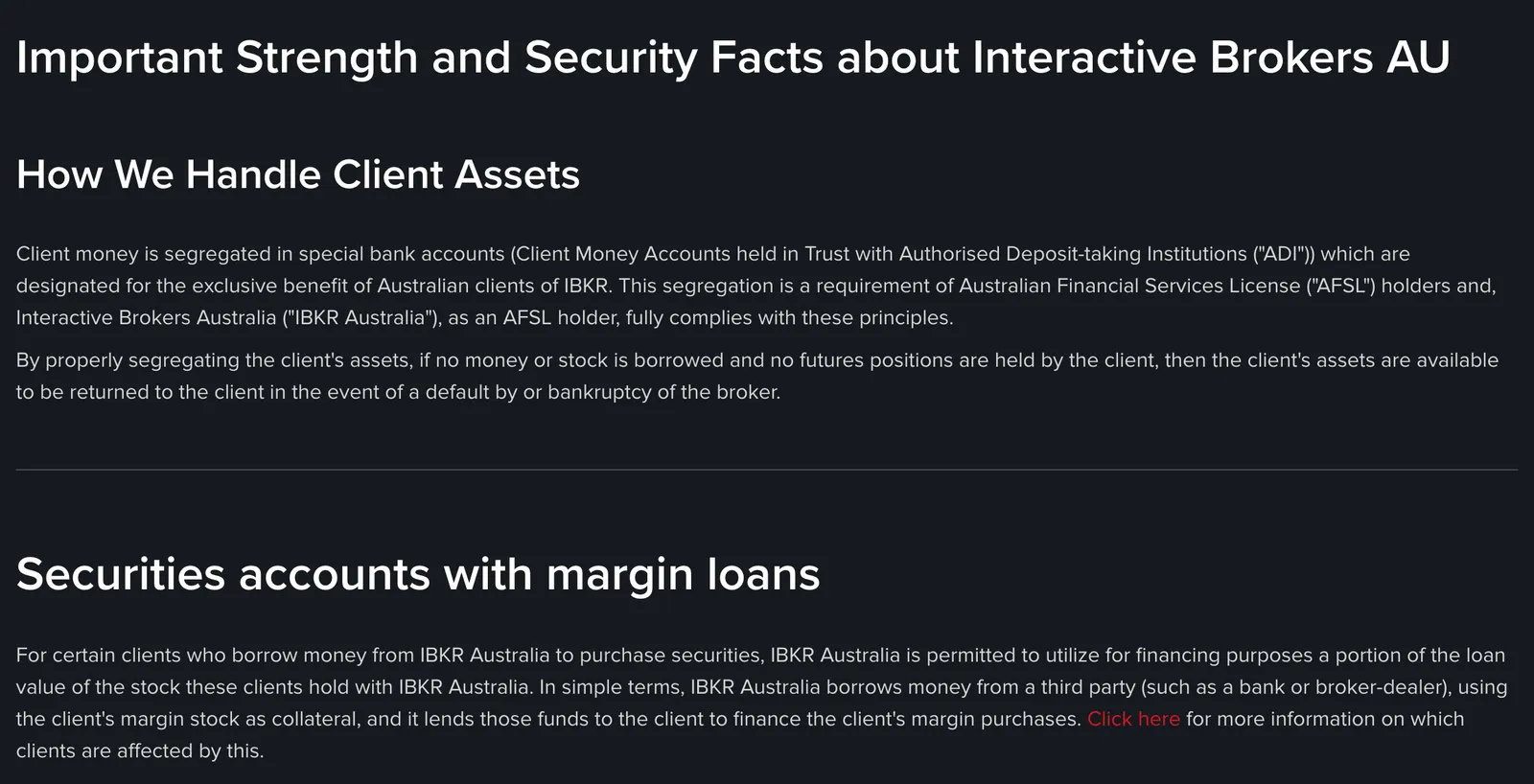
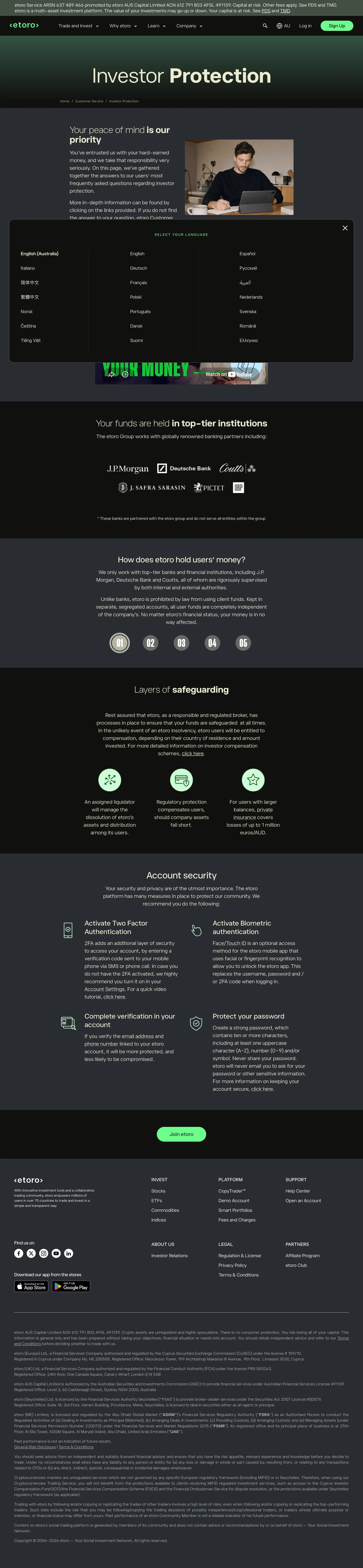
Client-money rules can depend on the service, product and account structure. Even where money must be held separately for a service, segregation is not deposit insurance or a general investor-compensation guarantee. Read the account terms and ask which legal entity holds the money, and in what capacity.
The Financial Claims Scheme concerns eligible deposits with eligible Australian authorised deposit-taking institutions. It is not a general guarantee for brokerage accounts, shares, CFDs or forex trades. The Compensation Scheme of Last Resort is limited to specified circumstances and services, and AFCA's summary lists dealing in foreign exchange and derivatives among services outside its scope. Neither scheme covers ordinary market losses simply because an investment falls in value.
How to verify an ASIC licence
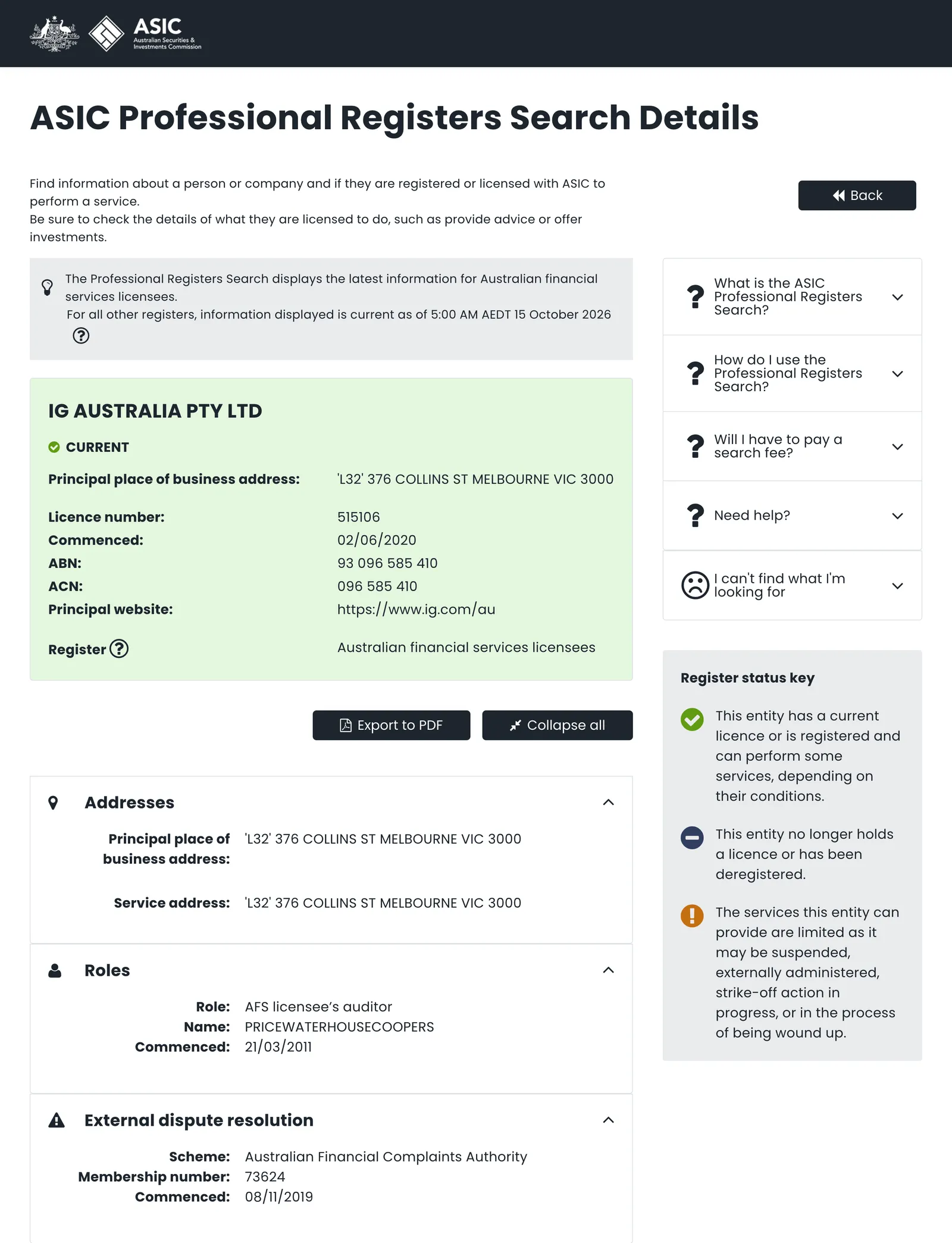
Search the ASIC Professional Registers and use the ASIC registers guide to understand what each register holds. Search independently rather than relying on a broker-provided link or screenshot.
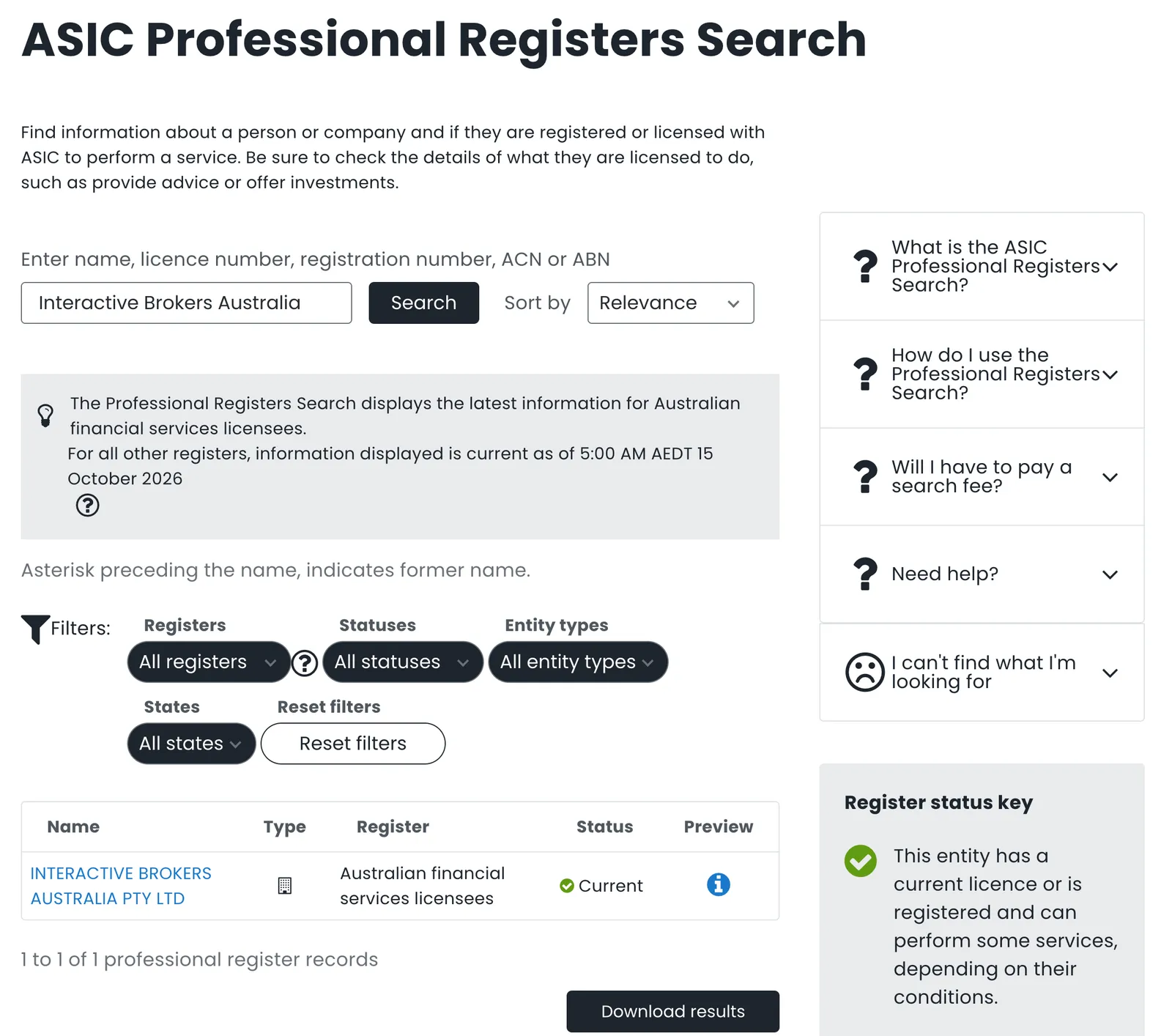
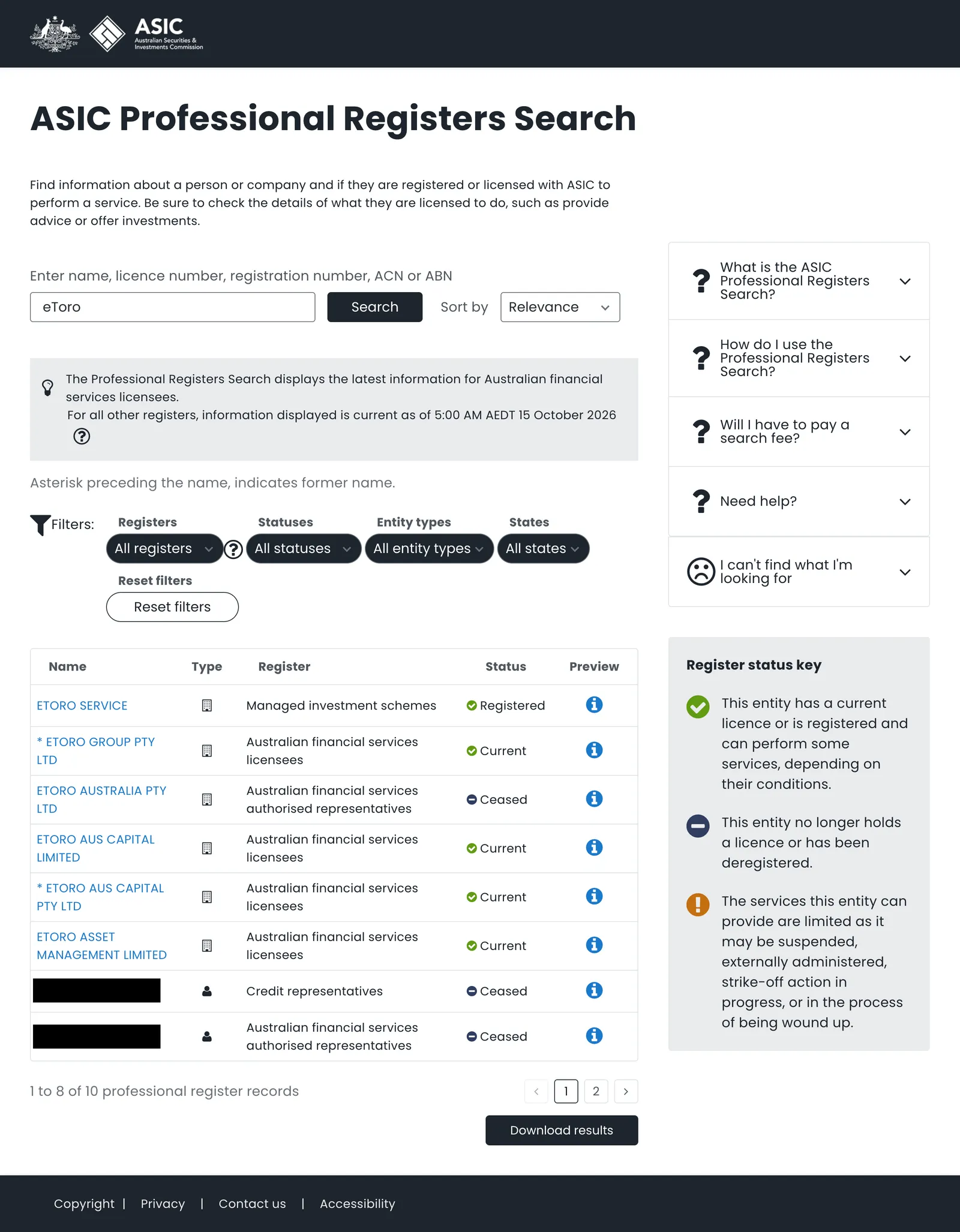
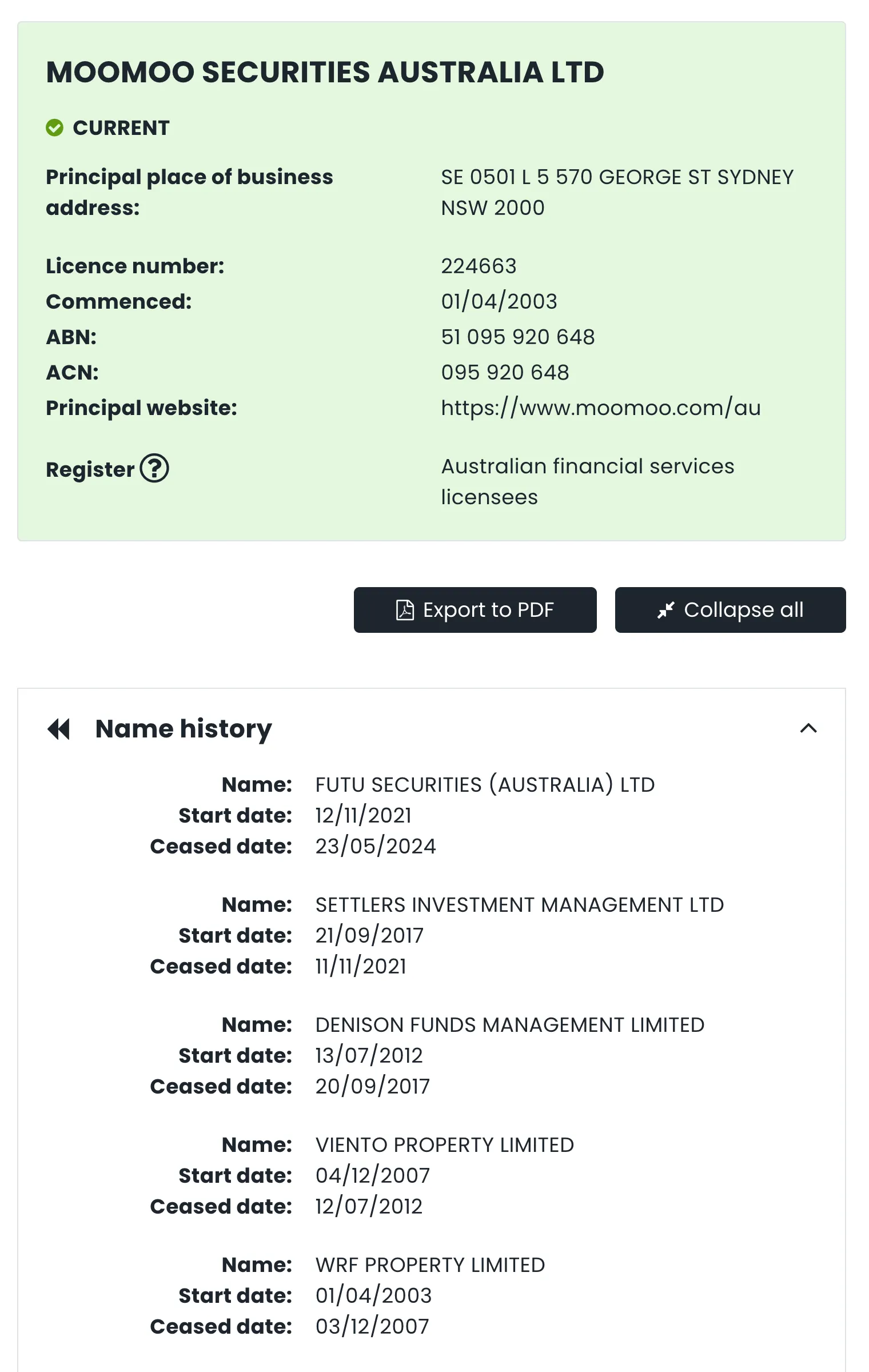
- Identify the account entity. Find the full legal name in the client agreement, account-opening documents and product disclosure documents. Record the ACN or ABN if provided.
- Search the exact entity and licence details. A brand search may not return the legal company. Watch for similar names and impersonation sites.
- Check the role and status. Determine whether the entity is the AFSL holder or an authorised representative, and whether the authorisation is current.
- Read the authorisations and conditions. Confirm the listed permissions fit the actual service and product offered. Do not infer permission to hold client money or provide a particular product from a general licence claim.
- Compare with the website and documents. The entity name, website domain, contact details and payment instructions should all be consistent. Stop if they do not match and ask the firm for a written explanation.
- Check warnings and complaints options. Review ASIC's Investor Alert List and confirm whether the firm is an AFCA member. If a caller or website supplied the contact details, cross-check them against the official register.
If the broker claims ASIC authorisation but you cannot find the relevant entity, the register shows a different status, or the permissions do not match the service, do not deposit until you have independently resolved the discrepancy.
ASIC-licensed brokers we have verified
No broker is listed here yet. A broker appears here only after we have checked the exact Australian contracting entity against ASIC's own register and compared the entry with its current client agreement and product disclosure documents.
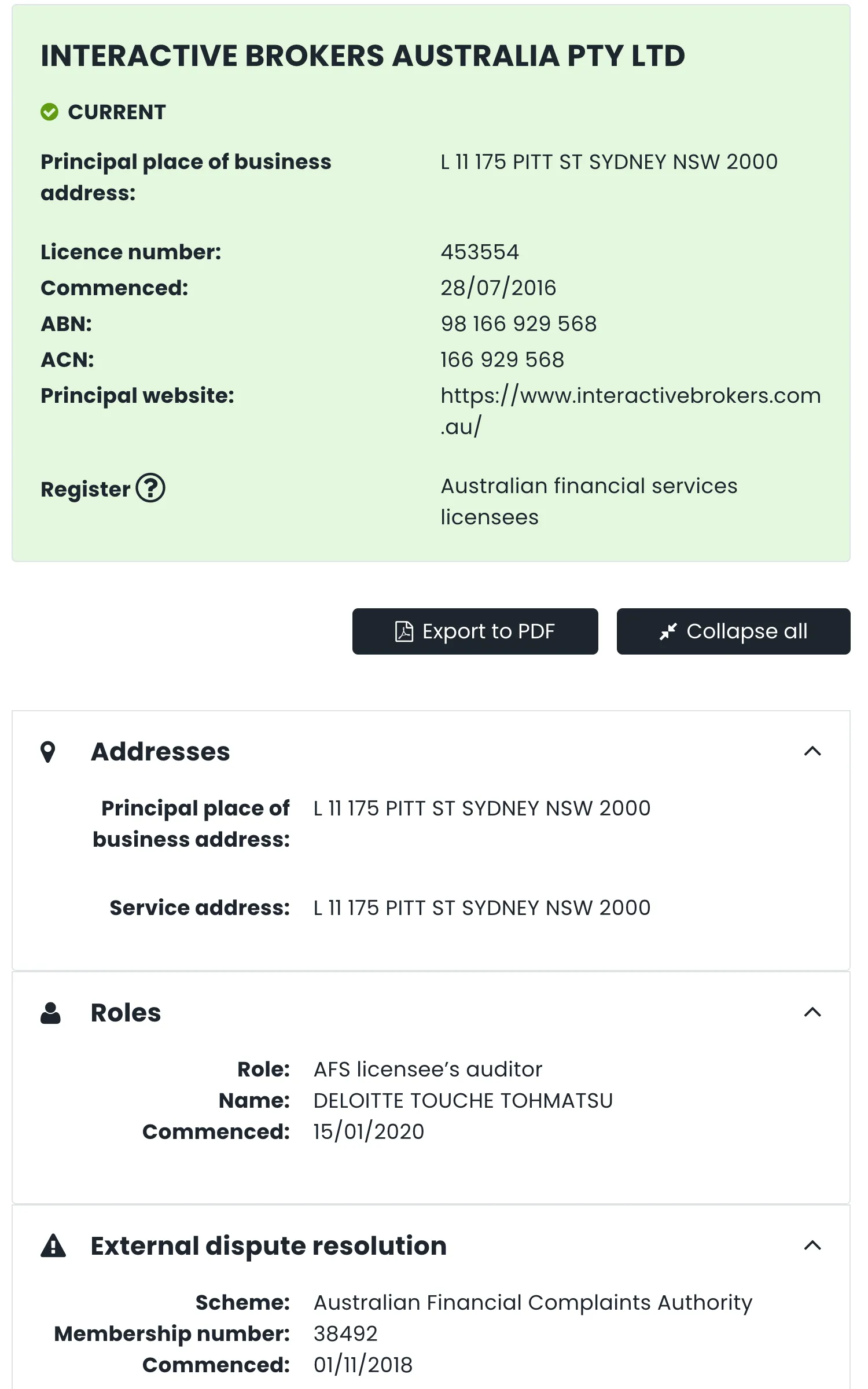
For each firm we record at least:
- brand and Australian contracting entity;
- whether it is the AFSL holder or an authorised representative, and the principal licensee if relevant;
- licence number, current register status, relevant permissions and any material conditions;
- the date the register was checked and a link to the official register result; and
- whether the named entity holds the account or introduces clients to another entity.
Warnings and enforcement
ASIC publishes consumer alerts and takes enforcement action where it considers laws or regulatory obligations have been breached. Check the regulator's current information before you act, and pay close attention to warnings about companies that misuse a real firm's name or licence details.
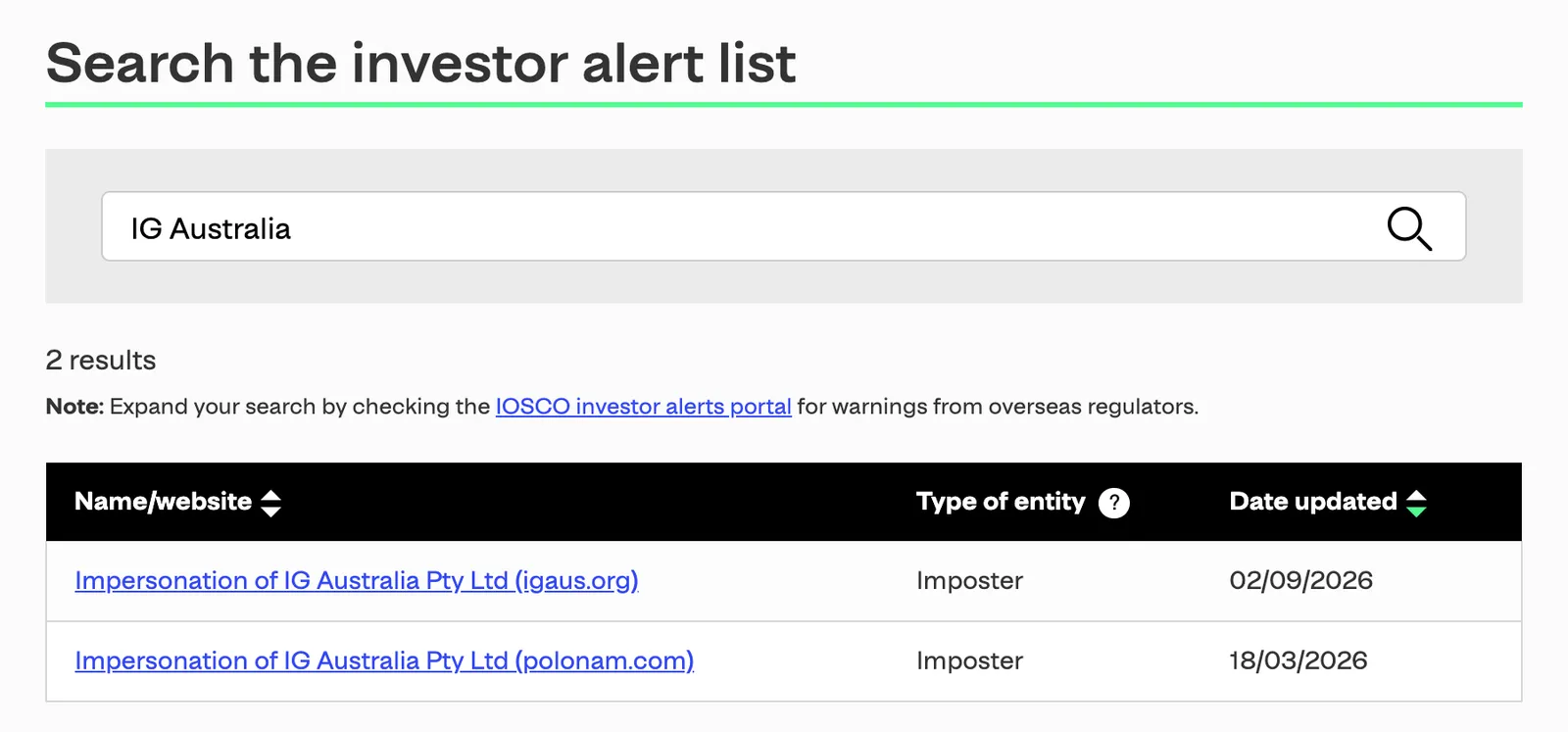
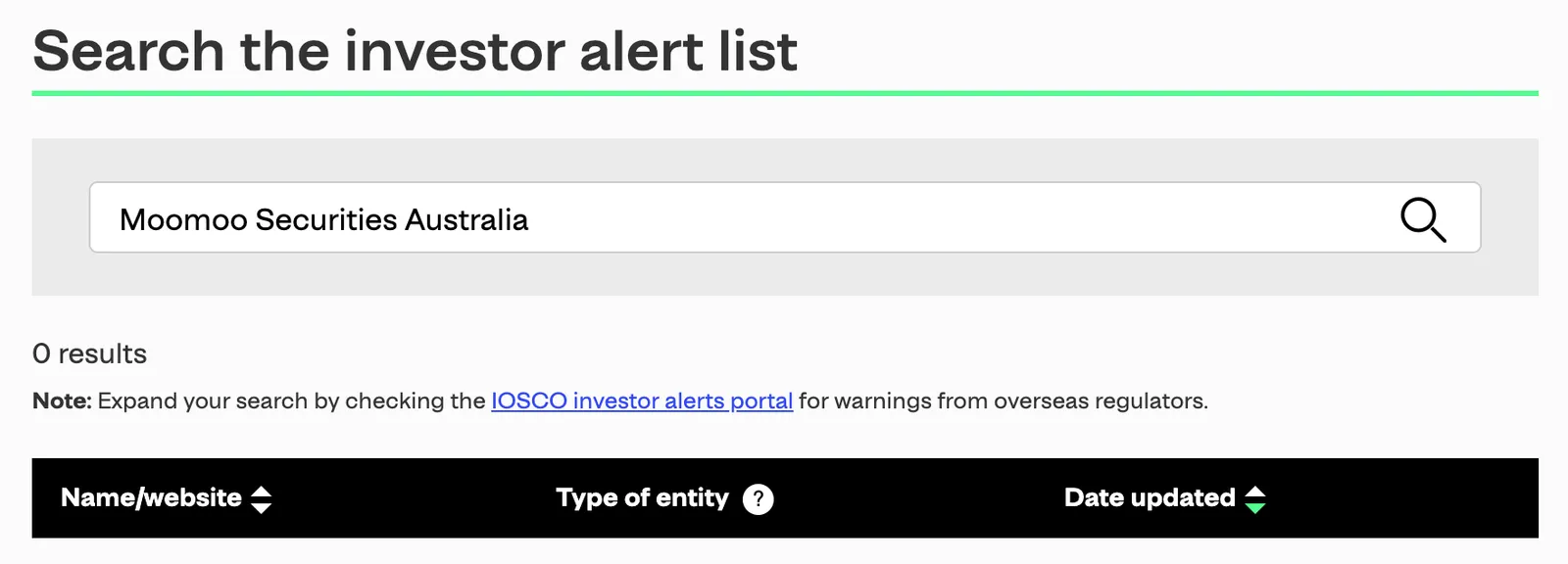
A legitimate licence number can be copied by an impersonator. If you suspect a clone, do not use the phone number, email address or payment details in the suspicious message. Compare the website and contact information with ASIC's official records, contact the genuine firm using independently verified details, and report suspected scams through the relevant official channel.
Editorial and disclosure note
This page is factual information only, not financial product advice (personal or general), tax or legal advice, and not a recommendation to use a broker or buy or sell an investment. Where this site earns a commission from a reviewed firm, that relationship is disclosed clearly. The compensation arrangement must not determine which entities are described as ASIC-licensed or how the licence checks are reported.